
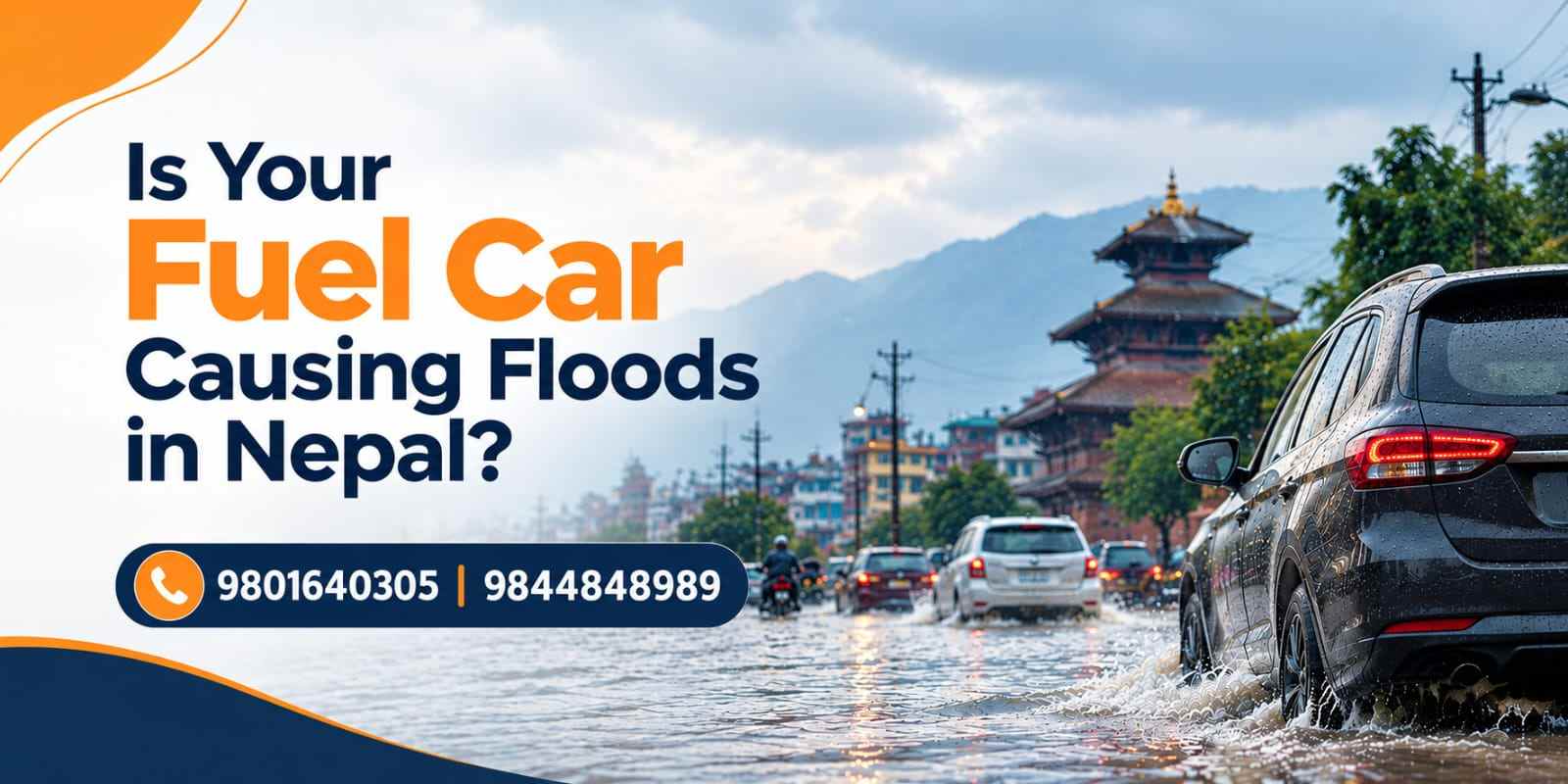
Every monsoon, the same scenes return. Streets in Kathmandu turn into rivers. Motorbikes stall mid-road, cars sit half-submerged, and traffic freezes as rain pours relentlessly. In places like Lalitpur and Kalanki, even a few hours of heavy rain can flood entire stretches, leaving commuters stranded and businesses shut.
It’s easy to blame poor drainage, unmanaged waste, or just “another bad monsoon.” And yes those are real issues. But there’s a quieter contributor most people don’t think about: the fuel-powered vehicle parked right outside your home,office or cafe.
Here’s the uncomfortable truth. While Nepal contributes only a tiny fraction to global emissions, our growing dependence on petrol and diesel vehicles is adding to a bigger problem. These emissions are accelerating climate change, making monsoons more intense, rainfall more unpredictable, and urban flooding more frequent. While the need of sustainable solution for this seems instant and immediate, best EV cars have already entered and skyrocketed the Global Personal vehicle market.
The Science of the Link: How Tailpipes Feed Torrents
Every time a petrol or diesel engine runs, it releases carbon dioxide and other greenhouse gases. These gases trap heat in the atmosphere, slowly raising global temperatures.
As temperatures rise, the atmosphere holds more moisture. This is explained by the Clausius-Clapeyron principle that warmer air can carry significantly more water vapor. When that moisture is released, it doesn’t come as light rain. It comes as sudden, intense downpours.
That’s why Nepal’s monsoon is changing. Instead of steady rainfall, we’re seeing short bursts of extreme rain, cloudbursts that overwhelm drainage systems and flood cities within hours.
Fuel vehicles also contribute to something called the urban heat island effect. In dense cities like Kathmandu, heat from engines, roads, and buildings gets trapped, making local temperatures higher than surrounding areas. This further disturbs local weather patterns and increases the chances of heavy rainfall events. Also with the growing fuel prices, people are desperately searching for the best fuel efficiency cars but the immediate global solution seems important here.
Nepal’s Vulnerability: Why Fuel Cars Hit Harder Here
Nepal is not built to absorb climate shocks easily. Our geography makes us more vulnerable than most.
The country’s steep terrain and fragile Himalayan ecosystem mean that when heavy rain falls, water moves fast. Rivers swell quickly, landslides become more likely, and flash floods hit with little warning.
At the same time, cities like Kathmandu, Lalitpur, and Pokhara are rapidly expanding. Open land is being replaced with concrete, leaving rainwater with nowhere to go. Natural drainage paths are blocked, and even moderate rainfall can lead to waterlogging.
Then there’s the traffic paradox. Vehicles sit idle in long traffic jams, burning fuel without moving. These emissions add to the problem of warming the atmosphere and contributing to the very extreme weather that causes flooding and congestion in the first place.
Do you want to help reduce carbon emission around Kathmandu and all over Nepal. Do you regularly ride ridesharing apps like Pathao, Indrive, Yango and Uber? Here are some best EV cars on rent you can get them without worriying about C02 emissions.
Beyond Carbon: Secondary Ways Fuel Vehicles Worsen Floods
The impact of fuel vehicles goes beyond emissions.
Every vehicle sheds tiny particles from tires and brakes. These microplastics and heavy metals settle on roads and eventually get washed into drainage systems during rainfall. Over time, they clog waterways and reduce the efficiency of drainage networks.
There’s also an economic angle. Nepal spends a significant portion of its resources importing fossil fuels. That’s money that could otherwise be invested in better drainage systems, flood management, and climate-resilient infrastructure.
In simple terms, fuel dependency not only contributes to the problem, it limits our ability to fix it.
The Solution: Shifting Gears in Nepal
The good news is that Nepal is in a unique position to change direction.
With abundant hydroelectric power, the country has a strong foundation for clean energy. Electric Vehicles (EVs) offer a practical solution by eliminating tailpipe emissions and reducing reliance on imported fuel.
But the shift isn’t just about EVs. Cities need better public transportation systems, improved urban planning, and infrastructure that can absorb rainwater instead of blocking it. Concepts like green spaces and permeable surfaces can significantly reduce flooding risks.
At an individual level or lets just say Renting an EV Car in Kathmandu, small choices matter too. Carpooling, reducing unnecessary trips, maintaining vehicles for better efficiency, or gradually transitioning to EVs for rental and public use can collectively make a difference.
FAQs
1. Are fuel cars the main cause of floods in Nepal?
No, but they are a contributing factor. Floods are caused by multiple issues like poor drainage, urban planning, and climate change. Fuel vehicles add to climate change, which intensifies rainfall.
2. Does switching to an EV really help?
Yes. EVs reduce local emissions and help lower overall greenhouse gas output, especially in Nepal where electricity largely comes from hydropower.
3. Why does Kathmandu Valley Need EVs for Ridesharing and Transportation?
Kathmandu Valley desperately needs EVs for ridesharing and transportation to combat its severe, bowl-trapped air pollution and reduce Nepal's heavy economic dependence on imported fossil fuels. Furthermore, transitioning to electric vehicles leverages the country's abundant domestic hydroelectricity while drastically lowering daily operating costs for drivers and transit operators. Also, we recomment you choose an ev while renting car around kathmandu valley.
4. Are EVs practical for Nepal’s roads and distances?
For city travel and common routes like Kathmandu, Pokhara or Chitwan, EVs are becoming increasingly practical with improving charging infrastructure.
5. What can I do if I still use a fuel vehicle?
Drive efficiently, avoid unnecessary idling, maintain your vehicle regularly, and consider carpooling or upgrading to an EV in the future. Check BYD Price in Nepal, Check Tata Nexon K3 EV and other cars in EV category.
Conclusion
Floods in Nepal are not just about rain, they’re about how we live, build, and move. While global emissions play a major role, local actions still matter. Every fuel-powered trip adds a small piece to a much larger problem.
Rethinking transportation is one of the simplest ways individuals can contribute to change. The shift may not happen overnight, but it starts with awareness and better choices. For instance replacing old
Your next vehicle decision isn’t just about cost or convenience. It’s about resilience, your city, your community, and your future.
Are you considering switching to an EV for your next ride in Nepal? Share your thoughts with Travelkendra.
